
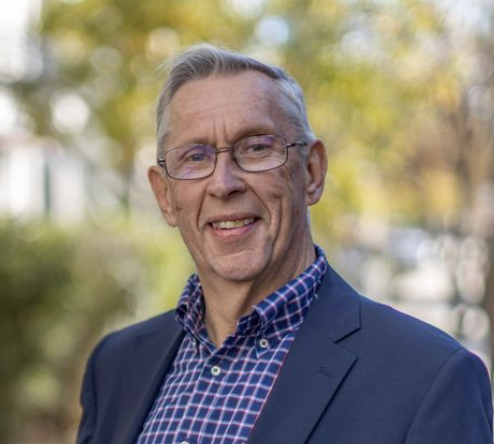
Bill O’Dea, a current Hudson County Commissioner, is running for mayor of Jersey City. Candidate responses are in bold. Any questions left blank, will be marked with an asterisk.
Housing

- Would you agree or disagree with this statement? “There is a housing shortage and building new housing helps make existing homes more affordable.”
- Strongly Agree
- Agree
- Disagree
- Strongly Disagree
- Would you agree or disagree with this statement? “Jersey City is seeing too much development and once I’m in office, I’d work to slow it down.”
- Strongly Agree
- Agree
- Disagree
- Strongly Disagree
- Would you agree or disagree with this statement? “I believe Downtown Jersey City is zoned for too much density. If elected to office, I would work to prevent more dense housing developments from being built Downtown even if such developments come with affordable housing and other community givebacks.”
- Strongly Agree
- Agree
- Disagree
- Strongly Disagree
We are in a housing crisis, the exception to density is if it brings MORE affordable housing and community givebacks.
- Do you agree or disagree with this statement? “If elected to office, I would be reluctant to allow more private housing construction in Jersey City because I think developers earn too much profit.”
- Strongly Agree
- Agree
- Disagree
- Strongly Disagree
Private housing that is constructed that has an increase in zoning must have affordable housing.
- Would you agree or disagree with this statement? “It is better to mandate affordability through policies like rent control than to increase total housing supply.”
- Strongly Agree
- Agree
- Disagree
- Strongly Disagree
Rent control stabilizes costs for current tenants, and a strong ordinance and enforcement prevents displacement. It does not expand supply.
- Should the city reform zoning to reduce parking requirements and allow the construction of more apartments near PATH and light rail stations?
- Yes, it is good to encourage more people to live near mass transit without needing to own a car
- No, it is important to create more parking near PATH and light rail stations
- No, this would be a giveaway to developers
- Yes, other (explain)
- No, other (explain)
- Do you support zoning and building code reforms citywide to reduce red tape around Floor Area Ratios, single staircase prohibitions, setbacks, and parking minimums that reduce the number of housing units built and drive up the costs of construction?
- Yes
- No
- In Jersey City, backyard accessory dwelling units (ADUs) are allowed in low-density residential zones. Do you believe such ADUs should be allowed or prohibited?
- Allowed
- Prohibited
If affordable or workforce for a minimum of 10 years.
- Would you support development projects like the 150 Bay Street proposal that would add 1,000 apartments – 150 of which are income-restricted affordable – community amenities, arts and studio space, and space for a new public school?
- Yes
- No
- Affordable housing is expensive to build. How would you pay for affordable housing?
- Force developers to absorb the costs
- Use tax incentives like PILOT agreements
- Direct subsidies from the city
- Other (explain)
In my non-profit development job, we use aspire credits, PILOTS, city subsidies, greenbonds, federal and state grants and LIHTC, inclusionary zoning. Developers can definitely absorb some of the costs if it makes financial sense.
- How would you increase the amount of income-restricted affordable housing units built?
- Floor Area/Density Bonus — flexibility to build more units in exchange for affordability
- PILOT Agreements — lower operating costs and make mixed-income projects financially viable.
- Streamlined Approval Process — reduces delays that discourage affordable units being built.
- Other (Please explain)
- Combination of the above (Please explain)
- What cities do you look to for housing policy inspiration? And by what metrics do you gauge their policies to be a success?
Portland uses inclusionary zoning and a streamlined permitting process to expand affordable units. Minneapolis was the first large US city to eliminate single-family zoning bringing more multi-unit dwellings to its residents. Vienna, Austria has a social housing model where 43% of their housing is publicly owned or subsidized; Jersey City’s public housing stock is 10%.
Transit

- Do you agree or disagree with the following statement? “In Jersey City, walking, biking, and riding mass transit should be incentivized to make it safer and easier to get around and reduce traffic.”
- Strongly Agree
- Agree
- Disagree
- Strongly Disagree
We definitely need to encourage the above to reduce traffic accidents and congestion.
- Do you support turning streets such as MLK and Bergen and Summit and Baldwin into one-way pairs that would create space for public service lanes – lanes that would speed up public transit and emergency response, add 100 on-street parking spots, and eliminate dangerous left-turns across on-coming traffic?
- Yes
- No
- If yes, where?
- If no, why not?
These specific streets are vital both ways for businesses, and at this time residents have voiced opinions against it citing longer traffic, and public safety. I’m not against turning key streets into one way when it makes sense.
- Do you support County Executive Craig Guy’s announcement to add bus rapid transit to JFK Boulevard?
- Yes
- No
- If no, why not?
I would support this during peak hours
- Bus routes often cross through multiple communities and delays in one part of the route can cascade to create service delays farther down the line. Do you believe any one neighborhood opposed to bus lanes should have a veto over public transit improvements that would benefit the entire city?
- Yes
- No
- If yes, why?
I am a firm believer in getting community feedback. If a community is for or against, I will support that community.
- Would you rather lose on-street parking spaces for the creation of bus rapid transit and protected bike lanes or convert more streets into one-way pairs?
- Lose on-street parking
- Create one-way pairs
*Better Blocks NJ Editor’s Note: No answer given
- Would you support the city pursuing litigation against the New Jersey Turnpike Authority to stop the Turnpike widening in Jersey City?
- Yes
- No
- If no, then why not?
- What changes, if any, would you make to Jersey City’s current implementation of its on-demand ride share service through Via?
Expand service hours- expand Saturday hours past 10pm, implement Sunday rides; look to integrate with public transit- possibly providing a last-mile connection to PATH or transit hubs. - Where would you like to see the Citibike station network expand to next in Jersey City?
It’s my understanding the City is currently in an expansion project from September 2025-November 2025 to add 23 additional locations across the city. Greenville, west side, and the heights definitely need access to Citibike. However, access alone does not guarantee a successful program- Citibikes are underutilized in Greenville, financial access is not the same for everyone. I would look to subsidize the program to help those with lower income to utilize the service. - Would you make a commitment to either bike, walk, or take public transit to work – like the majority of Jersey City residents – if elected to office?
- Yes
- No
- If yes, what is your preferred method of commuting?
While I drive, I walk a lot- community events, grocery stores, recreation. I intend to walk to City Hall Annex during good weather.
- What is your grand vision for the future of transportation in and around Jersey City? Be as specific as you want.
My grand vision would to move the city towards a more walkable, bikeable Jersey City; expand a more affordable mass transit with rapid transit lanes, and prioritize street re-designs. I will work with NJ Transit and PATH to offer more last-mile services.
Street Safety and Vision Zero

- In 2018, Jersey City committed to a Vision Zero goal of zero traffic deaths and serious injuries by 2026. In recent years, many streets have been redesigned to be safer and provide for transportation alternatives to automobiles. Do you support continuing Vision Zero efforts in Jersey City? How will you do so?
Yes, I support continuing Vision Zero in Jersey City. I was the first County official to push for vision zero working with the county executive to put this in place. Part of our plan is to calm traffic in residential zones, increase enforcement by our traffic division, and make sure road infrastructure is maintained; this will improve safety and access for pedestrians and cyclists without alienating drivers. I would fight to get Jersey City speeding cameras starting in school zones and high-traffic areas, street re-designs, no-turns on red in high-traffic intersections, and bike lanes. Integrate transit priorities, and tie capital budgets to vision zero benchmarks. - If you are currently in office, how have you supported Vision Zero efforts to redesign our streets for safety? If you are not in office, what has your participation been in working towards safer streets?
As a County Commissioner, I fought to bring the first bike lanes in Jersey City. I was the one who brought the red-light cameras to Kennedy Blvd before the state outlawed them, revenue from those cameras funded additional traffic patrols. I also sit on the County’s Vision Zero Taskforce. - If elected, would you support increasing the funding and capacity of the Department of Infrastructure to accelerate Vision Zero improvements, and how would you do so?
Yes, The current budget is too low, Jersey City is a Class A City due to our size. Our infrastructure is aging, we’re a coastal city, we’re looking to build sustainable, and our safety needs more than $3 million. I would look to supplement the budget with state and federal grants, Green Bonds, and public-private partnerships.We cannot meet basic infrastructure needs with $3 million. - Do you support proven Vision Zero street safety improvements on all high-risk streets in Jersey City like curb extension, protected bike lanes, and eliminating conflicted left turns across traffic?
- Yes
- No
- If no, why not?
- Do you support lowering the speed limit to 20 miles per hour city wide?
- Yes
- No
- If no, why not?
- Would you support the implementation of speed and parking enforcement cameras, if able?
- Yes
- No
- Would you be willing to fund safe street improvements and ease parking demand by increasing the cost of on-street parking in residential zones near PATH stations?
- Yes
- No
- If yes, how much should an annual on-street parking permit cost?
- What would you do to curb traffic-related fatalities and injuries on Jersey City’s streets and why is your solution the most effective? Which streets would you like to see safety improvements on?
Strategy must be systemic, not symbolic. We need to redesign traffic corridors, implement physical speed-calming measures, protected bike lanes, and safer pedestrian crossings; this includes automated enforcement and daylighting. Priority locations will be areas with the most traffic and documented traffic-related deaths. Additionally, lowering speeds and narrowing streets will be critical. - Do you support the city continuing to use new developments as an opportunity to fund or build adjacent pedestrian or bike safety improvements?
- Yes
- No
- What cities do you look to for street safety inspiration? And by what metrics do you gauge their policies to be a success?
Oslo, Norway; NYC, and Hoboken. Oslo had zero deaths in 2019 by removing cars from its central focus and redesigned streets for transit, cycling, and pedestrians. Hoboken has had zero traffic deaths since 2017, thanks to curb extensions, daylighting, and city-wide 20 mph speed limit. NYC has reduced pedestrian deaths by automated enforcement, protected bike lanes, and leading pedestrian intervals.
Public Parks and Plazas

- Some neighborhoods (such as Greenville and Journal Square) have less access to green space, parks and plazas than Downtown. How would you prioritize equitable investment in new and improved public spaces?
I would prioritize access deficits and pedestrian needs. Greenville and JSQ will be targeted for new parks, plazas, and green corridors. I will require that every capital project includes measurable community impact and accessibility metrics. I will also increase funding to the departments that are tied into this. - The Newark Pedestrian Plaza has been part of a major effort to transform streets into public places built for people. What changes would you make to the Newark Pedestrian Plaza?
Newark Avenue will stay under my administration, and I am certainly open to expansion after a fair and transparent process as to how it should expand that includes public input from residents, businesses, and community members who utilize that area. - Do you support keeping the Barrow Street portion of the Newark Pedestrian Plaza open to pedestrians and closed to traffic and building a playground for young children on the closed portion of Barrow?
- Yes
- No
- If no, why not?
- What other parts of the city would you suggest as a potential site for new (or expanded) pedestrian-only spaces?
I would start in other business districts. Journal Square would be ideal to have a pedestrian-only space. - Will you commit to continuing Jersey City’s efforts to protect Liberty State Park from attempts to develop or commercialize the park?
- Yes
- No
- After the revitalization of Liberty State Park is complete, will you commit to working with the Board of Education to revitalize the sports complex at Caven Point?
- Yes
- No
This is part of my platform policy.
- Would you be open to exploring if new developments can build new schools with on-site, multi-use outdoor fields for team sports and recreation?
- Yes
- No
- Would you support the city using new developments as an opportunity to fund or build adjacent public pedestrian plazas or parks?
- Yes
- No
- What plans do you have to increase the city’s tree canopy to reduce the urban heat island effect?
Tree Equity Initiative: Guarantee every neighborhood meets minimum tree canopy thresholds; prioritize tree planting in historically underserved areas. Ensure DPW’s parks and forestry has the proper equipment and certified arborists and tree specialists, ensure office of sustainability is properly funded. - What would be your top priorities for the creation of more passive outdoor park space and active outdoor recreational facilities?
Prioritize neighborhoods with limited park access, convert underused spaces, provide active (recreational fields, playgrounds) and passive amenities (benches, gardens); connect parks with safe pedestrian routes, and design based on community input.
One response to “Bill O’Dea Answers the Better Blocks Questionnaire”
[…] Ali Christina Freeman James McGreevey Bill O’Dea James Solomon Joyce […]