
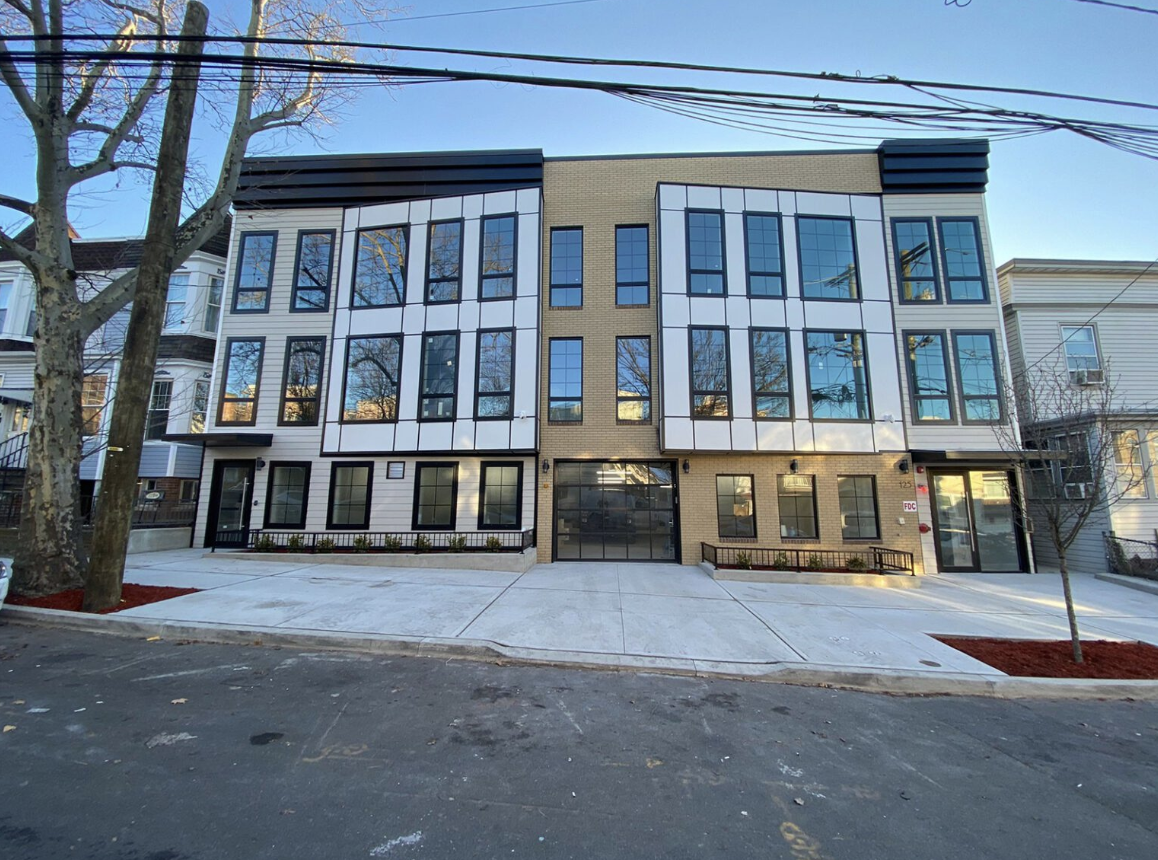
Part II in our Housing Policy Series
In our last article on housing policy, we explored how increasing housing supply – especially market-rate housing of all types – is essential to creating broad housing affordability. In Jersey City, some units produced are in fact immediately affordable for moderate-income households, but unfortunately, housing producers cannot build brand new homes and apartments that are affordable to low- and very-low-income families as soon as they are built. In this article, we will explore how policymakers attempt to make new new housing available to those households.
As a matter of equity, affordable housing advocates want low- and very-low-income people to have a chance to live in new housing. Building brand-new units that are affordable to very-low-income households is a money-losing venture, however. As a result, many policymakers have proposed various solutions to help these households afford a newly constructed home as a matter of equity. Housing Choice Vouchers (formerly known as Section 8) and income-restricted affordable housing are the two main ways our government helps very-low-income households afford newly constructed homes. Rent control, which is preempted on new construction under state law, will be discussed in a separate article.
What Are Low-Income and Very-Low-Income Households?
Affordable housing is generally available only to three tiers of tenants in New Jersey. The lowest tier is very-low-income households: households making below 30% of Area Median Income (“AMI”), where the median income is determined for households of the same size. In Jersey City, a very-low-income household is an individual making less than $26,730, or a family of four making less than $38,160. The next tier is low-income households: those making up to 50% of AMI. This would be one person making $44,550, or a family of four making less than $63,600. Moderate income households are those making up to 80% of AMI. This would be $71,280 for an individual, or $101,760 for a family of four.
Contrary to misconceptions, the area used for defining Area Median Income in Jersey City is not a neighborhood or city, but a 4-county region which includes Bergen, Hudson, Passaic, and Sussex Counties. It is very difficult for the growth of one neighborhood to skew the median income for the entire region used to calculate AMI.
Housing Choice Vouchers
Housing vouchers are, in many ways, an ideal policy solution to help more low-income households access housing. A voucher works like cash, so while it helps subsidize demand for housing, it is less likely to distort the housing market and limit new housing supply than other policies like mandatory inclusionary zoning ordinances and rent control.
The voucher program is only open to households who make under 50% of AMI. Households that receive a voucher pay 30% of their income for any apartment below Fair Market Rent, which is defined as 40-50% of area median rent for standard quality units. Rent can exceed the Fair Market Rent provided that it is less than 40% of household income; voucher holders, however, have to pay the difference where rent is greater than the Fair Market Rent.
The downside of housing vouchers is demand for the program far outstrips the supply of vouchers. Waiting lists are a decade long in Jersey City. The other key drawback of the system is, if a household’s income rises (a good thing), they lose access to the program. The household effectively faces large income tax in the form of the , which creates an adverse incentive for households to limit their income (a bad thing). Furthermore, in supply-constrained markets like the New York City metropolitan area, the voucher does push all market-rate rents higher because the added demand is chasing after scarce housing supply (see figure below).
Voucher Incidence in a Supply-Constrained Market
Since Housing Choice Vouchers are a federally funded program with limited supply and a long waiting list, Jersey City only has a few policy levers realistically under its control: 1) increase the supply of new income-restricted affordable housing through incentives, funding, or mandates; 2) increase the total supply of housing to ensure demand for housing does not outstrip total supply; 3) create a preference for voucher holders in new market-rate buildings; and 4) convert/maintain existing housing to affordable housing.
Who Qualifies for Income-Restricted Affordable Housing?
Newly constructed affordable housing in Jersey City is, by law, required to be identical to the market rate units that get built. A certain percentage of a new building gets “set aside” with rent caps and tenant eligibility restrictions for inclusion in the affordable housing program.
For income-restricted affordable housing, Jersey City generally follows the NJ state standards known as the Uniform Housing Affordability Controls (“UHAC”). UHAC requires that applicants seeking income-restricted affordable housing units be very-low, low- or moderate-income, with qualifications determined based on household size.
Under UHAC, income-restricted affordable housing units have to be built to the same standards as market-rate units in any new construction and must be interspersed throughout the building. For buildings with more than 10 affordable units, at least 80% of the affordable units offered must be two- and three-bedroom apartments, including at least 20% being three-bedroom apartments. 13% of all apartments must go to very-low-income households (up to 30% of AMI), and another 37% of all apartments have to go to low-income households (up to 50% of AMI). The remaining units can go to households that make up to 80% AMI, provided that on average, the units must be affordable to households making 53% of AMI.
For very-low-income units (13% of a building’s affordable housing unit count), rent is capped at $703 per month for a studio or $1,045 for a 3-bedroom. For low-income units, rent is capped at $1,172 for a studio or $1,742 for a 3-bedroom. For moderate-income units (around half of a building’s affordable housing unit count), rent is capped at $1,876 for a studio or $2,788 for a 3-bedroom.

Because demand for income-restricted affordable housing exceeds the supply, qualifying households have to apply for a unit, are put on a waiting list, and are then selected by a lottery process. Critically, many immigrants, particularly undocumented migrants including “Dreamers” subject to DACA who have lived in the US since they were children, do not qualify for either Section 8 housing vouchers or income-restricted affordable housing [Resources for the Immigrant Population]. Given the limitations on who can apply for affordable housing, most households in Jersey City are not eligible for affordable housing and must rely on broader market-rate affordability in older housing units to rent a home.
Despite the drawbacks and capacity constraints in building new affordable housing units, there are good reasons to be supportive of affordable housing programs, especially in wealthy neighborhoods.
For families, affordable housing in wealthier neighborhoods has a positive effect on young children’s educational outcomes and improved lifetime earnings as they get access to more opportunities [Chetty et al. (2016)]. In fact, New Jersey’s affordable housing policy has largely been a desegregation effort; the plaintiff in the famous Mount Laurel court case that established affordable housing obligations in New Jersey’s suburbs was the NAACP.
Summary
There are two main ways that we make new housing available to very-low- and low-income households: vouchers and income-restricted affordable housing.
For politicians, including income-restricted affordable housing (with its concentrated but smaller overall benefits), is more politically palatable than just a blanket increase in housing supply. In an expensive area like Jersey City, often takes the form of luxury housing, so the benefits are more diffuse and less apparent, even if they are greater overall. The trouble is affordable housing is often very costly to build, and direct subsidies are politically difficult if not fiscally infeasible.
In the next article in our series, we will look at how Jersey City can pay for affordable housing by looking at programs that work and programs that don’t work.
5 responses to “What is “Affordable” Housing in Jersey City?”
[…] Read: What is “Affordable” Housing? […]
[…] Read More: What is Affordable Housing in Jersey City? […]
[…] Who Qualifies for Income-Restricted Affordable Housing? Rendering of 547-555 Summit Ave with Journal Squared on its left. Credit: C3D Architecture. […]
[…] Read Part II in the Housing Policy Series […]
[…] Read More: What is Affordable Housing in Jersey City? […]