
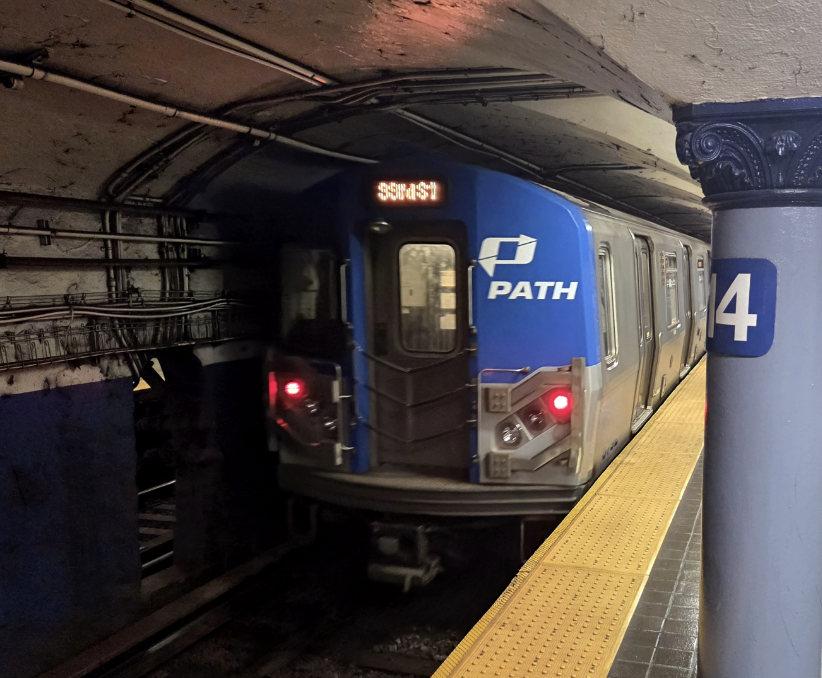
On May 17, the Port Authority (a bi-state agency controlled by the governors of New York and New Jersey) implemented substantial service improvements. Direct weekend service every 10 minutes was restored between Journal Square and 33rd Street for the first time in over 20 years. In addition, Journal Square-33 St service no longer stops in Hoboken dueing the day on weekends, shaving up to 8 minutes off every journey. Hoboken to World Trade Center Service was also reintroduced.
Taken together, these changes mean service into Manhattan every 6 to 10 minutes from every Jersey City and Hoboken train station as well as shortened trip times during weekend days.

The results of this service improvement were drastic and immediate: average weekend ridership in June surged 26% year-over-year. The average Saturday ridership of 144,391 and average Sunday ridership of 114,146 were the highest levels since statistics have been made available in 2012. The previous records for June rudership were 125,923 on Saturday and 105,328 on Sunday. The ridership increases came despite a 13% fare hike on May 4. Weekday ridership, meanwhile, was up a more modest 9% year-over-year, still about 23% below pre-pandemic levels due to the rise of remote work.
While some have noted the effect of World Cup closures of Penn Station on two match days, both matches were on Saturdays, but ridership increased even more on Sundays (26.5%) than on Saturdays (25.3%).
The service improvements were catalyzed by the rapid growth in transit-oriented development in Jersey City and driven by the determination and efforts of transit advocates with Hudson County Complete Streets [HCCS]. HCCS launched its Better PATH Campaign in 2024 with a petition drive that gathered thousands of signatures [A Better PATH]. HCCS is now looking to repeat its success with campaigns to improve bus and light rail service and is actively seeking volunteers [Better Light Rail, Better Buses]. Jack McKee, Communications & PATH Campaign Organizer for HCCS, noted: “The dramatic increase in PATH’s weekend ridership demonstrates that when public transportation is a viable option, people choose to ride. We hope NJ Transit takes note of these numbers and works towards making similar improvements to the Hudson-Bergen Light Rail to achieve 10-minute off-peak headways.”

Population pressures added urgency to the campaign. Jersey City grew by 18% in population between 2010 and 2020, and Hudson County overall grew by 14%. This increase, driven largely by thousands of new apartments with little or no accessory parking, has created a growing customer base that makes more frequent transit service more financially viable and a more pressing need, as well as increasing the political constituency for improved service. The number of households in Jersey City without a car grew by almost 20,000 between 2014 and 2024, an astounding 53% increase. In 2024 44% of Jersey City households were car-free, up from just 37% a decade earlier [Census Bureau].

We are making the PATh ridership data we have compiled going back to 2012 publicly available here:
Editor’s Note: We erroneously edited the article, indicating the late-night Hoboken stop had been removed.
2 responses to “PATH Weekend Ridership Smashes Modern-Era Records After Service Improvements”
PATH should look to work with JC and HudCo to build new rail + property into other parts of JC.
Yes, PATH expansion is a must. West to Newark Airport and hopefully beyond.