
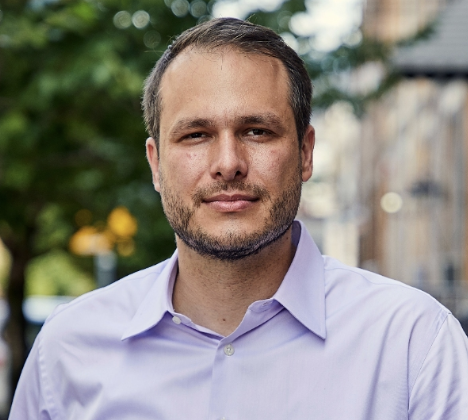
James Solomon, a Jersey City Councilman, is running for mayor of Jersey City. Candidate responses are in bold. Any questions left blank, will be marked with an asterisk.
Housing

- Would you agree or disagree with this statement? “There is a housing shortage and building new housing helps make existing homes more affordable.”
- Strongly Agree
- Agree
- Disagree
- Strongly Disagree
- Would you agree or disagree with this statement? “Jersey City is seeing too much development and once I’m in office, I’d work to slow it down.”
- Strongly Agree
- Agree
- Disagree
- Strongly Disagree
- Would you agree or disagree with this statement? “I believe Downtown Jersey City is zoned for too much density. If elected to office, I would work to prevent more dense housing developments from being built Downtown even if such developments come with affordable housing and other community givebacks.”
- Strongly Agree
- Agree
- Disagree
- Strongly Disagree
- Do you agree or disagree with this statement? “If elected to office, I would be reluctant to allow more private housing construction in Jersey City because I think developers earn too much profit.”
- Strongly Agree
- Agree
- Disagree
- Strongly Disagree
The fact that Jersey City has seen new development is a positive—it shows that we live in a desirable, growing city. The issue is not new development per se, but the fact that the development that has occurred in the past two decades has not happened in an inclusive manner that maximizes public benefits for city residents given market conditions.
In many cases, developers received tax abatements that they did not need to make a project financially viable, resulting in a windfall to them at the expense of our taxpayers. For instance, the second and third towers of the “Journal Squared” development clearly did not require any financial subsidy to be marketable, and nevertheless the Kushners received a significant abatement for those towers, despite the fact that this project didn’t include a single affordable unit. Similarly, the City Council just this past fall pushed through an abatement for the Kushners for the Pompidou project, even though the City has presented absolutely no viable financial operating plan for that project, again with no affordable homes.
Over and over again, the City has missed numerous opportunities to demand stronger community givebacks as part of new development, including affordable housing, community infrastructure including safe streets infrastructure, schools, and parks and recreational facilities. As Mayor, my priority will not be to discourage development, but to make sure that the City is getting every possible benefit out of the development that is occurring, so that Jersey City can be affordable to all of its residents.
- Would you agree or disagree with this statement? “It is better to mandate affordability through policies like rent control than to increase total housing supply.”
- Strongly Agree
- Agree
- Disagree
- Strongly Disagree
When done appropriately, I do not believe that rent control policies and policies to increase total housing supply are mutually exclusive. We can maintain incentives for new housing construction, while also actually enforcing Jersey City’s existing rent control ordinance so that buildings that are now subject to rent control do not become unaffordable for longtime residents. Similarly, we can make sure that landlords are not exploiting their market power to demand unconscionable, double-digit rent increases that well outpace rental inflation, while also maintaining the incentive to build new housing including affordable housing. Other international cities have struck this kind of balance and have had success in maintaining housing affordability in high-demand markets. Of course, our context is specific and this must be done thoughtfully, and my housing plan discusses how my administration will do this in considerable detail.
- Should the city reform zoning to reduce parking requirements and allow the construction of more apartments near PATH and light rail stations?
- Yes, it is good to encourage more people to live near mass transit without needing to own a car
- No, it is important to create more parking near PATH and light rail stations
- No, this would be a giveaway to developers
- Yes, other (explain)
- No, other (explain)
- Do you support zoning and building code reforms citywide to reduce red tape around Floor Area Ratios, single staircase prohibitions, setbacks, and parking minimums that reduce the number of housing units built and drive up the costs of construction?
- Yes
- No
- In Jersey City, backyard accessory dwelling units (ADUs) are allowed in low-density residential zones. Do you believe such ADUs should be allowed or prohibited?
- Allowed
- Prohibited
- Would you support development projects like the 150 Bay Street proposal that would add 1,000 apartments – 150 of which are income-restricted affordable – community amenities, arts and studio space, and space for a new public school?
- Yes
- No
In principle, I support upzoning an existing high-density area to secure a large number of new affordable units, and desperately needed infrastructure including new school infrastructure and open space. These are exactly the kinds of benefits that the City has failed to secure from developers over the last decade despite many opportunities to drive a harder bargain to do so. I advanced such a project nearby at 72 Montgomery which added 100 affordable housing units, 400 market rate units, and a new park.
However, the current 150 Bay St proposal has significant flaws. The developer is not committing to deeding the school to Jersey City Public Schools at no cost, or to covering the costs of the school build out. Instead he is demanding JCPS pay for those costs, despite JCPS having publicly stated they do not have the funds for either. Additionally, even though pre-K suitable classrooms are by far the most needed space for schools in downtown JC, it is unlikely that the current configuration could be used for pre-K given strict state requirements. Therefore, it is much more accurate to say that Jersey City is not receiving a public school in this current proposal – instead we are receiving a space that could be a K-5 school when future public funding is received.
The developer is also demanding an upzone that is considerably more aggressive than the previous upzones in the neighborhood, including those that were granted for the surrounding high-rise properties or those being proposed on nearby lots such as 107 and 127 Morgan Street.
We are eager to see a revised proposal that addresses these substantive concerns – density in-line with nearby high-rise projects and a commitment to provide the school free of charge to JCPS – in order to deliver the best possible deal we can for our residents.
- Affordable housing is expensive to build. How would you pay for affordable housing?
- Force developers to absorb the costs
- Use tax incentives like PILOT agreements
- Direct subsidies from the city
- Other (explain)
As Mayor, I will use an expansive approach to make sure that the City meets our affordable housing goals. The level and type of subsidy that will be required to accomplish this will vary widely based on the specifics of particular projects and where they are located within the city. In all cases, the City will work with all parties to secure the level of public subsidy that is necessary to make the affordable set-aside financially viable, while ensuring that the City is receiving commensurate benefits and that no windfall is accruing to the developer. This could variously include tax incentive agreements, direct or in-kind subsidies from the City, and various forms of state subsidy like HMFA financing or the Aspire program, among others.
- How would you increase the amount of income-restricted affordable housing units built?
- Floor Area/Density Bonus
- PILOT Agreements
- Streamlined Approval Process
- Other (Please explain)
- Combination of the above (Please explain)
As I have stated in my comprehensive housing plan and noted above, we will impose strong affordability requirements for new development in Jersey City and use the tools available to the City to make sure these projects move forward expeditiously. This will certainly include streamlining approval and permitting processes to reduce unnecessary barriers to development, as I have described in detail in my “Make Shit Work” plan.
- What cities do you look to for housing policy inspiration? And by what metrics do you gauge their policies to be a success?
Jersey City is operating in a unique environment, as we are an extremely dense, land-constrained major urban municipality in our own right, but also part and parcel of the NYC metro area—one of the most housing constrained metro areas in the entire country. As a result, while I have comprehensively studied the policies of numerous cities in pulling together my housing plans, I don’t believe that there is any one example that is perfectly applicable to Jersey City. With that said, I will always look to gains and or reductions in average rents against an expected baseline as a key indicator of whether a housing policy is promoting affordability.
Transit

- Do you agree or disagree with the following statement? “In Jersey City, walking, biking, and riding mass transit should be incentivized to make it safer and easier to get around and reduce traffic.”
- Strongly Agree
- Agree
- Disagree
- Strongly Disagree
- Do you support turning streets such as MLK and Bergen and Summit and Baldwin into one-way pairs that would create space for public service lanes – lanes that would speed up public transit and emergency response, add 100 on-street parking spots, and eliminate dangerous left-turns across on-coming traffic?
- Yes
- No
- If yes, where?
- If no, why not?
In general, I believe that BRT and street redesigns can be successful across the city, and I will continue advocating for it as I have since before this election. But it requires careful planning, research, and community buy-in.
Mayor Fulop’s proposal is a clear example of how not to engage the city’s residents, especially in neighborhoods that have been historically neglected by successive administrations. He tweeted out that an idea would be scheduled for a vote without being able to answer basic questions about his plan, and then refused to show up in the community to explain it.
The representatives from the Department of Infrastructure honestly explained to the community that they were forced to come up with a workable proposal on the fly after that tweet. They again honestly answered that they did not have the opportunity to do basic evaluations of what the proposal would mean for emergency response, transit times, and other key metrics.
It does not help anyone for the Administration to approach these transit proposals in such a cavalier manner. When that happens, it only undermines support more broadly for serious transit proposals and ideas that actually have the evidence to show that they will benefit the community overall.
My approach, as it has been, will be to build support for good policy through community organizing to ensure transit improvements are well thought out and can actually be implemented in every neighborhood.
- Do you support County Executive Craig Guy’s announcement to add bus rapid transit to JFK Boulevard?
- Yes
- No
- If no, why not?
- Bus routes often cross through multiple communities and delays in one part of the route can cascade to create service delays farther down the line. Do you believe any one neighborhood opposed to bus lanes should have a veto over public transit improvements that would benefit the entire city?
- Yes
- No
- If yes, why?
- Would you rather lose on-street parking spaces for the creation of bus rapid transit and protected bike lanes or convert more streets into one-way pairs?
- Lose on-street parking
- Create one-way pairs
I believe that Bus Rapid Transit and protected bike lanes are both major assets for our city. I have long held the position that the best corridor for bus rapid transit would be JFK Boulevard, as this major thoroughfare has the space and ridership to make it successful based on models in cities like Mexico City and Bogota. This idea was proposed by my running mate, Eleana Little, when she ran for County Executive in 2023.
With that said, I don’t believe that this question can or should be answered in the abstract. I believe that it is the job of the city government, and the Mayor in particular, to conduct thorough analysis of what is needed to accomplish these goals on a case-by-case basis and what the trade-offs would be for the affected neighborhoods. I also believe that City Government provides ample opportunities for community input as part of the process of determining these plans, and building consensus around them.
My perspective is based on my experience as Ward E Councilman for almost a decade. I’m proud to have delivered protected bike lanes, wider sidewalks, and safer crosswalks during my time on the City Council. I was responsible—with city partners—for the conversion of Grove Street to a one-way street, the expansion of the Newark Ave Pedestrian Mall that eliminated some parking for vibrant public space, and numerous protected bike lanes and street design projects that we were able to accomplish with more limited impacts on streets and parking. These include my work spearheading the Coles Street redesign, Newark Ave protected bike lane, and the Columbus, Grand, Marin, Greene, and Washington road diets, protected bike lanes, and complete street designs.
There is no one in this race who has more practical experience than I do in navigating the trade-offs with these projects and actually getting them done.
- Would you support the city pursuing litigation against the New Jersey Turnpike Authority to stop the Turnpike widening in Jersey City?
- Yes
- No
- If no, then why not?
- What changes, if any, would you make to Jersey City’s current implementation of its on-demand ride share service through Via?
Currently, VIA serves as a supplement to Jersey City’s normal commute patterns. It’s designed to take residents from the Heights and South Side (the “outer zone”), to the denser and transit-rich areas of Downtown and Journal Square. This is logical and makes sense as a starting point. However, not all traffic fits this pattern, especially on Saturdays. I believe it makes sense to pilot a system with more zones, allowing VIA riders more options, especially on weekends. - Where would you like to see the Citibike station network expand to next in Jersey City?
The core limiting factor to the citibike network until now has been the fact that a series of neighborhoods had very limited or no citibike stands at all. This unequal coverage made it very inconvenient to utilize Citibike across much of the city. The current major expansion resolves much of that problem for Bergen-Lafayette, the West Side, and part of Greenville. However, the Heights remain underserved with only a few stations and with most of the core Heights totally unserved. There is no station north of Pershing/Leonard Gordon Park and west of Palisade Ave, including the commercial core of Central Ave. This is the obvious next expansion and would make the citibike stations at the Heights light rail vastly more usable.
Two other needs immediately come to mind. First, there is a citibike desert in the area of Jersey City that lies north of the Holland Tunnel but south of Hoboken, and where there has been significant development in recent years. Second, there is currently no station on the NJCU campus. - Would you make a commitment to either bike, walk, or take public transit to work – like the majority of Jersey City residents – if elected to office?
- Yes
- No
- If yes, what is your preferred method of commuting?
I walk to and from work at City Hall; I take the PATH and Light-Rail to events.
- What is your grand vision for the future of transportation in and around Jersey City? Be as specific as you want.
I’ve laid out my vision for transportation in detail in my comprehensive transit plan. As I note there, we need reliable transit and safer streets. Every day, hundreds of thousands of people commute in, out, and around our city via train, bus, light rail, bike, and car. But the service our residents receive is not at the level we pay for and deserve, with frequent delays, and trains and buses that do not come often enough even when they are on time. And our city streets are far too crowded and unsafe, with dangerous drivers and delivery bikers acting without regard for others, seemingly without any consequences.
As Mayor, I will use my political capital to finally hold PATH and NJTransit accountable for delivering the basic transit service that Jersey City residents deserve and pay for. And I will end the impunity for those who endanger others on our streets, moving aggressively to make Jersey City much safer for pedestrians, drivers, and bicyclists alike. This includes the following top priorities:
1. Fighting to make PATH provide consistent service for all riders, not just during commuting hours.
2. Cracking down on unsafe drivers and investing in safety improvements to achieve Vision Zero.
3. Pushing NJTransit to run more buses more frequently.
4. Reducing wait times for light rail riders and adding light rail stops in transit deserts.
5. Fighting against the expensive turnpike expansion plan that will pollute air and increase traffic.
Street Safety and Vision Zero

- In 2018, Jersey City committed to a Vision Zero goal of zero traffic deaths and serious injuries by 2026. In recent years, many streets have been redesigned to be safer and provide for transportation alternatives to automobiles. Do you support continuing Vision Zero efforts in Jersey City? How will you do so?
Over the course of my time on the city council I have been deeply committed to Vision Zero and making our streets safer for pedestrians, cyclists and drivers. In my 8 years representing Ward E, we have installed pedestrian safety infrastructure on nearly every major intersection, successfully implemented the pedestrianization of Newark Ave, and have installed bike lanes on every major roadway in the Ward. I’ve worked closely with bike and pedestrian advocates and built community buy-in for these changes along the way. This is extremely close to my heart, I’m a dad of three beautiful girls. Every day, I worry about their safety on our streets. That’s why, if elected mayor, I will fight every day to make Jersey City’s streets the safest in the region.
Safe streets means the full realization of Vision Zero – no more half-measures or policies divorced from the realities facing our communities. I want a city where pedestrians and bikers feel as safe on the roads as drivers, and where everyone is following appropriate traffic safety laws. But safe streets doesn’t just mean enforcement; it means active investment in infrastructure that promotes safe, open streets. That includes dedicated bus lanes and protected bike lanes, including a network of protected bike lanes connecting all neighborhoods of Jersey City. It also means increasing open streets weekends and expanding our city’s pedestrian plazas to reduce the overall congestion in the city, as well as visible striping for parking so drivers know where to go.
Additionally, in June, I pledged to commit to the following actions to achieve Vision Zero, and the city has my full commitment to implementing these actions as Mayor:
1. Make public a list of all the priority intersections that need safety improvements, organized by highest priority, and update the public on progress accordingly
2. Lower citywide speed limit to 20 mph
3. Fight for automated speeding enforcement and work with Trenton to overturn its ban
4. Fully staff our Department of Infrastructure and Planning
5. Eliminate right turns on red - If you are currently in office, how have you supported Vision Zero efforts to redesign our streets for safety? If you are not in office, what has your participation been in working towards safer streets?
See answer above. - If elected, would you support increasing the funding and capacity of the Department of Infrastructure to accelerate Vision Zero improvements, and how would you do so?
Yes.
The current $3 million annual budget has resulted in an overworked, overburdened, and understaffed Department of Infrastructure. They do good work but need and deserve full staffing and resources. As Mayor, that is exactly what I’ll commit to. In fact, I already proposed an amendment to this year’s budget to significantly increase the salary and wage lines for Traffic and Engineering as they are critically short on staff. This was unfortunately voted down.
This year’s amendment would have added $415,000 to Traffic Engineering’s salary line, an increase of 79%, and $368,200 to the Engineering division’s salary and wages, an increase of 65%. These allocations would allow us to fill all of the vacant, technical positions these two critical divisions requested from the current administration but were denied. For traffic engineering, this would allow them to fill five key positions: a senior traffic engineer, two regular traffic engineers, one traffic analyst, and an engineering aide. For Engineering, this would allow them to fill five key positions: two vacant principal engineer positions, one engineering aide, one Supervising Engineer, and increase the salary for the vacant chief engineer position, which the city has been unable to fill for over a year.
The fact is that as of today, four of Engineering’s five actual engineer positions are vacant, including the city’s Chief Engineer, while Traffic Engineering has no actual traffic engineers on staff. In both cases, this has required the remaining division staff — including the director herself — to fill in those blanks. This has made even routine work difficult and time-consuming, as even adding a bumpout requires an engineer to review the structural work. Not having these positions means we too often rely entirely on outside contractors, or the three directors themselves, resulting in slow progress.
As Mayor, I would ensure that there is funding to not only keep all of these positions filled, but also ensure that the city provides the Department of Infrastructure sufficient, dedicated capital funds to do all the projects they need to hit each year. The Department needs roughly $10 million in dedicated funds annually for street projects that can not be tapped by other departments, and I will make sure they get these funds as Mayor. - Do you support proven Vision Zero street safety improvements on all high-risk streets in Jersey City like curb extension, protected bike lanes, and eliminating conflicted left turns across traffic?
- Yes
- No
- If no, why not?
- Do you support lowering the speed limit to 20 miles per hour city wide?
- Yes
- No
- If no, why not?
- Would you support the implementation of speed and parking enforcement cameras, if able?
- Yes
- No
- Would you be willing to fund safe street improvements and ease parking demand by increasing the cost of on-street parking in residential zones near PATH stations?
- Yes
- No
- If yes, how much should an annual on-street parking permit cost?
- What would you do to curb traffic-related fatalities and injuries on Jersey City’s streets and why is your solution the most effective? Which streets would you like to see safety improvements on?
See answers on Vision Zero above. A non-exhaustive list of the next phase of improvements I would like to see includes the following:
• Making permanent the soft improvements on most major roads with concrete and green infrastructure, including, but not limited to, Columbus, Grand, Marin, Greene, Washington, Bergen, Newark, Montgomery, and Mallory
• Installing the next phase of citywide bump-outs and protected crosswalks on the Central Avenue business corridor.
• Traffic calming and mitigation, including intersection improvements on Monticello Ave, Martin Luther King Dr and Communipaw Ave.
• Traffic signals, bump-outs, lane narrowing, wide-walk widening, and daylighting on corners on Garfield Avenue, as well as additional stop signs including near Bayside Park. - Do you support the city continuing to use new developments as an opportunity to fund or build adjacent pedestrian or bike safety improvements?
- Yes
- No
- What cities do you look to for street safety inspiration? And by what metrics do you gauge their policies to be a success?
There are various cities that I look to that have made productive interventions in contexts that are similar to what we face in Jersey City—I don’t think there is one obvious “gold standard” that we should seek to fully mimic. Hoboken, for instance, has made significant investments in traffic safety that have clearly yielded results, including meaningful investment in daylighting, creation of more all-way stop intersections, and combined safety/green infrastructure. With that said, there are also differences in that Hoboken does not have the large thoroughfares that JC has, which is why we need even more aggressive interventions like the lower city-wide speed limit, automated enforcement, and so on.
In terms of metrics, I follow both outcome-based metrics (e.g., crashes, fatalities / injuries, average speed on thoroughfares, transit ridership, enforcement statistics), as well as process-based metrics (e.g., amount of daylighting intervention, miles of protected paths / lanes, safe streets investment in underserved areas, etc.).
Public Parks and Plazas

- Some neighborhoods (such as Greenville and Journal Square) have less access to green space, parks and plazas than Downtown. How would you prioritize equitable investment in new and improved public spaces?
I fully agree that access to park and plaza space is highly inequitable across the City and investment in the areas you mention is a top priority. Some of the green space initiatives outside of downtown that I will prioritize include the development of Courthouse Park, Skyway Park, Bergen Arches, and the Morris Canal Project more broadly. In general, we will work with the full array of stakeholders to unlock financing options for these projects and remove barriers to moving them forward. As Mayor, I will look at measures of open space per capita as key metrics for how well we are doing in making public spaces more equitable across all of our neighborhoods. - The Newark Pedestrian Plaza has been part of a major effort to transform streets into public places built for people. What changes would you make to the Newark Pedestrian Plaza?
I have been an extremely strong supporter of the Pedestrian Plaza since I was first elected to the Council, and I am in constant communication with the vital businesses on the Plaza about the challenges and issues that they are currently facing. In general, I support the continued expansion of the Plaza, but we also need to take real steps to address the troubling increases in empty storefronts, public safety concerns, and the overall maintenance of the space. This will require a multi-pronged plan, including measures to invest in public safety enforcement and to improve affordability for businesses and would-be entrepreneurs on the Plaza.
With regard to public safety, me and my staff personally go to the plaza to catalogue reports of crime and send them to city departments; connect homeless individuals on the plaza to services and care; and regularly communicate with Public Safety to discuss police coverage in the area. In my view, my staff shouldn’t be the ones doing walking patrols to report incidents to Public Safety – it should be the police themselves proactively patrolling to stop incidents of public drinking and crime, in coordination with community workers who are engaging with the folks in need in that area and connecting them to services. The fact that none of this has happened is exactly why I’m running for Mayor – to ensure our city services are fully operational and responsive, and that public safety is treated with the priority it deserves. That includes my “Make Shit Work” plan to upgrade and modernize our city services, including our disastrous 911 operator services, and my policing plan to add 100 cops to the street beat while emphasizing community policing and resources for homelessness.
I also want to make sure that we’re both meeting the needs of folks who are homeless or at risk of homelessness while responding to the concerns of community members, especially regarding the plaza. This means bringing community-based mental health first response to folks experiencing acute crises, following the Assertive Community Treatment (ACT) model successfully launched in other cities and states. It also means being proactive about preventing homelessness by investing in Housing First and bringing thousands of units of affordable housing to Jersey City. - Do you support keeping the Barrow Street portion of the Newark Pedestrian Plaza open to pedestrians and closed to traffic and building a playground for young children on the closed portion of Barrow?
- Yes
- No
- If no, why not?
Yes, but only after there is a proper plan in place for maintenance, investment, and design, which the current Administration has utterly failed to put in place
The initial $7 million infrastructure investment into this space was squandered by the failure to put in place a plan for subsequent maintenance, as evidenced by all of the dead trees that everyone can see. There has been absolutely no coordination between the SID, the Department of Public Works, and the Infrastructure Department to get a long-term operating plan in place. We need to have a credible plan for the ongoing maintenance of the space.
With regard to the playground, this is another example of the current Administration’s haphazard approach to governing. A private firm named Arterial was engaged and was developing a unique design to integrate a new playground with the rest of the plaza in a way that made sense for child safety and experience, and also for access for the businesses and residents on the plaza. Partway through this process, the current Administration arbitrarily shifted course and proposed a traditional playground design that had significant flaws in the context of the space. As Mayor, I would revert back to the previous approach, and re-engage Arterial to determine a design that will work for all stakeholders.
- What other parts of the city would you suggest as a potential site for new (or expanded) pedestrian-only spaces?
I will work to pedestrianize Provost Street between Morgan and 2nd St, which will create an extraordinary public space outside the new headquarters of the New Jersey Symphony Orchestra in a neighborhood that needs significantly more open space.
Additionally, a good candidate for a pedestrianized street would be Liberty Street next to Newark Avenue in Ward C. This is a street that is often closed to support events on Newark Ave already, and could serve to enhance the India Square pedestrian experience while preventing cut-through traffic on Newark Avenue. Ward C suffers from a lack of pedestrian-only spaces and open spaces of any type, which this would help alleviate. - Will you commit to continuing Jersey City’s efforts to protect Liberty State Park from attempts to develop or commercialize the park?
- Yes
- No
- After the revitalization of Liberty State Park is complete, will you commit to working with the Board of Education to revitalize the sports complex at Caven Point?
- Yes
- No
- Would you be open to exploring if new developments can build new schools with on-site, multi-use outdoor fields for team sports and recreation?
- Yes
- No
- Would you support the city using new developments as an opportunity to fund or build adjacent public pedestrian plazas or parks?
- Yes
- No
- What plans do you have to increase the city’s tree canopy to reduce the urban heat island effect?
Jersey City has extremely poor tree canopy coverage at 15%, well-below the average American city. And tree coverage varies along socioeconomic lines, with Jersey City’s working class communities and communities of color experiencing far lower tree coverage than other parts of the city. Despite this, this past year, Jersey City did not allocate any dedicated funds to tree planting. Not only has the city not been investing in new tree planting, the city also has not had the resources to maintain existing trees, many of which wind up being cut down. Expanding the tree canopy isn’t just a matter of scenery: tree canopies make cities more climate-resilient by lowering the temperature. I am committed to doubling Jersey City’s tree canopy as Mayor, across every ward. We will also take advantage of existing grants, like the state’s Green Workforce Grant Challenge, which provides significant amounts of capital to grow a green workforce by funding things like green workforce training and support services. Finally, I will support the creation of microforests in empty and under-utilized lots across the City. - What would be your top priorities for the creation of more passive outdoor park space and active outdoor recreational facilities?
Please see the outdoor park initiatives that I have outlined above. Additionally, following the successful model of New York City, I will work with the Board of Education to open public school playgrounds to the community after school hours and on weekends, to ensure that the public has access to the public spaces their tax dollars support. For new active outdoor recreational facilities, my top priority is the development of a new public recreational center in Ward A near Bayside Park.
2 responses to “James Solomon Answers the Better Blocks Questionnaire”
[…] Ali Christina Freeman James McGreevey Bill O’Dea James Solomon Joyce […]
[…] city’s financial situation encourages him to reconsider and come out in support of this project [Solomon Answers the Better Blocks Questionnaire]. The good news is four members of the city council indicated support for the 150 Bay proposal in […]