
This post was written by Christian Gomez, a volunteer with Better Blocks NJ and a Jersey City resident who lives in Bergen-Lafayette.
There’s a particular kind of paralysis that masquerades as civic virtue in Jersey City. It shows up at community meetings dressed in the language of “resident input,” “stakeholder engagement,” and “co-governance.” And it ends with almost nothing getting built, fixed, or decided. Residents should start asking a simple question: do we want our elected and appointed officials to govern, or do we want them to keep asking us for permission to do the jobs we elected them to do?
Why do we need a de facto community referendum on little changes like expanding permitted parking zones?
In November 2025, NJ Transit, which owns and operates the Park & Ride lots at the Liberty State Park and West Side Avenue Hudson-Bergen Light Rail stations, banned overnight parking at both locations. The decision was unpopular with residents of Bergen-Lafayette and the West Side, who had come to rely on those commuter lots as overflow parking. Council President Denise Ridley (Ward A) received most of the complaints, and she responded by introducing an ordinance to create residential permit parking zones in the affected neighborhoods. It passed first reading 9-0 but is still awaiting a second reading.

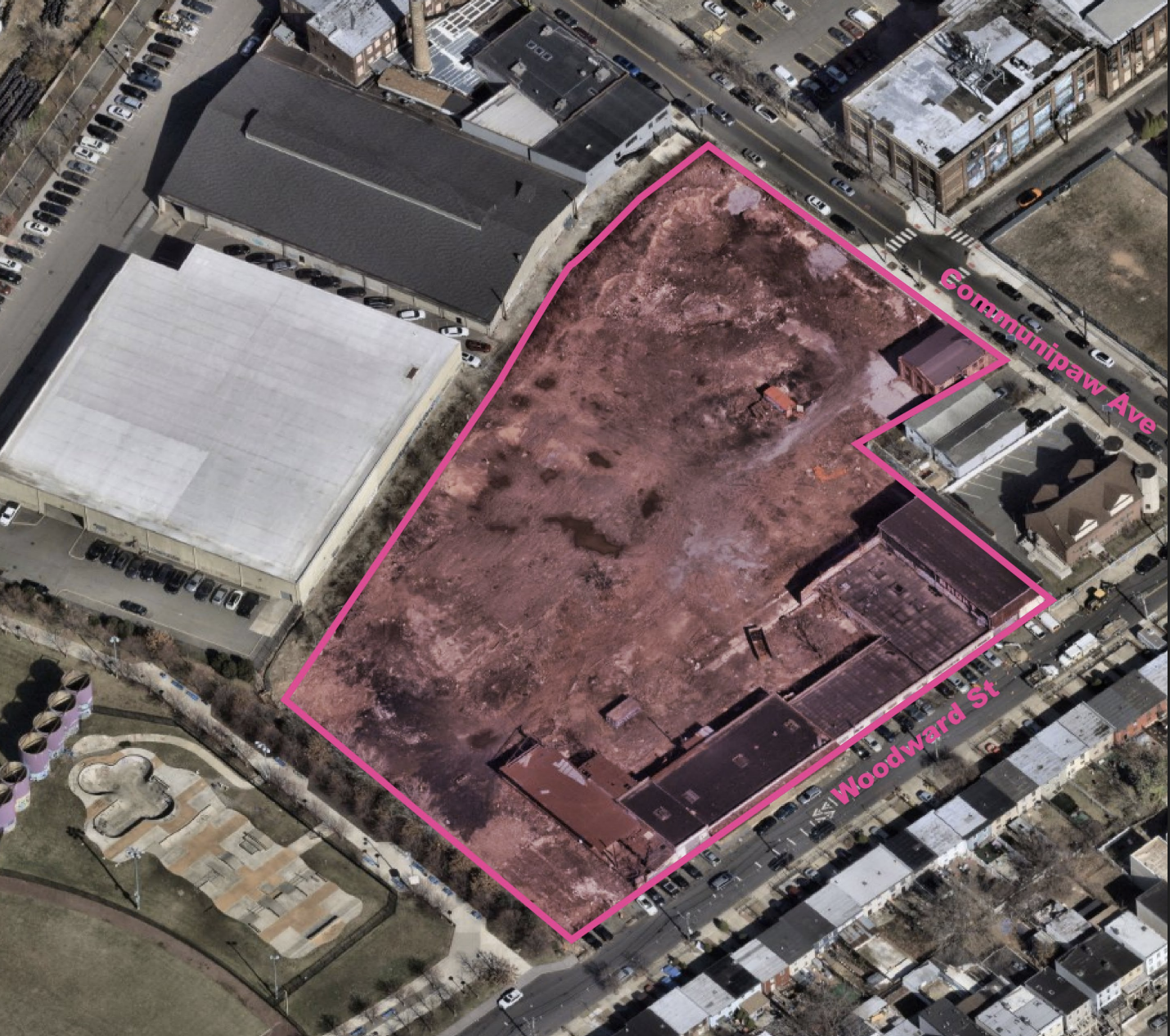
Expanding permit parking to parts of Communipaw by the light rails station seemed like it would sail through when the ordinance was first introduced and passed its first reading. Instead, it’s been delayed over a month. Finally, on Tuesday, April 7, Council President Ridley, along with Assemblyman Jerry Walker, convened another community meeting in Bergen-Lafayette to litigate the issue of parking with attendees, alongside a separate discussion of the proposed 417 Communipaw Ave rezoning (the project at the old Steel Tech site that has had numerous community meetings over the years). Several dozen residents, including myself, showed up to speak with city officials.
Andy Kaplan, Jersey City’s newly appointed Director of Infrastructure and a professional traffic engineer by trade, opened the floor for Q&A alongside Ridley. What followed was a predictable request for more parking rather than solving the problem of too many cars. One resident suggested the city turn the land under the Turnpike Extension viaduct into parking. Another proposed the city partner with auto insurance companies to sponsor publicly-owned lots. Kaplan, a subject-matter expert whose job is designing functional streets, eventually asked for a show of hands on whether the neighborhood wanted permit parking at all. While a majority said yes, many said the idea “needs more thought.”
Putting a price on parking and creating zoned permit parking is not a novel concept. Much research has gone into the high costs of “free” parking. It should not require an extensive series of community meetings to address this issue. Yet here was the Director of Infrastructure taking an extremely unscientific straw poll of attendees to assess whether there was support to create a new zone for a parking permit that costs $15 a year for residents. This is a change so minor and so clearly needed that it should have passed a second reading weeks ago 9-0.
This is an abdication of leadership
There are clear, evidence-based policy prescriptions that deliver safe streets and abundant housing, and Jersey City has professional staff who know what they are. Kaplan clearly isn’t the problem here. He’s doing what the political culture in City Hall wants every government functionary to do: chase consensus at all costs, even on decisions that don’t require it.

Community input can be valuable. It is especially useful for evaluating and discussing tradeoffs between proposals. It is a waste to answer simple and straightforward questions like “should we have paid permit parking?” That question has a clear “yes” for an answer when on-street parking is scarce. Something is wrong if the city’s Infrastructure head has to seek absolute consensus from whomever happens to show up at a community meeting on a weekday evening, especially because those meetings can be unrepresentative [Neighborhood Defenders: Participatory Politics and America’s Housing Crisis].
The Steel Tech rezoning tells the same story in brick and mortar
The 417 Communipaw Ave rezoning is the same dynamic but in the form of brick and mortar housing. The “community giveback” list for Steel Tech has ballooned to include street widening on Woodward Ave, a recreation center, additional surface-level public parking, 20,000 square feet of open space, and subsidized commercial rents. The project likely does not work financially without some form of government subsidy like a PILOT agreement.
City Planner Matt Ward deserves credit for telling residents honestly that not all of what they “want” will fit on the parcel (nor is there infinite room in the budget). Recognizing and educating the public on tradeoffs is a good use of community meetings but, the problem with Steel Tech, is the list of demands got this long in the first place because our elected officials routinely fail to set parameters or realistic expectations. Politicians who seek to please everyone often end up pleasing no one.

This is a pattern Better Blocks has flagged before in the context of PILOTs and inclusionary zoning: when elected officials refuse to articulate what a project actually needs to pencil, the conversation drifts toward a wish list that no project can deliver. The result isn’t better community benefits, but rather fewer projects breaking ground, fewer homes built, and fewer of the amenities residents were promised.
When no one draws a line, demands compound without constraint, and everyone leaves disappointed when reality hits.
What actual engagement looks like
There’s a version of community engagement that serves residents well: elected officials present concrete options, subject-matter experts get to articulate the tradeoffs, and the public responds to real proposals rather than drafting them from scratch in a church basement. But that requires elected officials who come to meetings be prepared to lead, educate, and present a vision of what’s possible and who are willing to stand by the city’s professional staff to get things done.
Last year’s disastrous and chaotic community meeting on dedicated bus lanes ultimately led to the loss of much of the Infrastructure Department’s senior staff after attendees threatened their safety. While this week’s meeting was much less contentious, it still showed Jersey City’s elected officials are unable to take decisive action on even the least controversial of decisions.
Jersey City has no shortage of thoughtful, engaged residents willing to show up. What’s in short supply is elected officials willing to meet that energy with decisiveness, and a political culture that lets our city’s leadership do the jobs they were hired to do.
9 responses to “Jersey City Officials Keep Asking Permission to Do Their Jobs”
Leadership involves making decisions in a timely manner. Time is money – especially in a city that is hundreds of millions in the budgetary whole. Many more people elected these officials to do their jobs. It is well known/studied that community meetings only attract certain sub-sections of the community and are absolutely not representative of the electorate.
This framing sounds neat on paper, but it flattens what’s actually happening on the ground in Jersey City.
Community engagement isn’t “paralysis masquerading as virtue.” It’s what happens when residents have spent years or even decades being left out of decisions that directly impact their quality of life. People aren’t asking for permission to govern; they’re asking not to be steamrolled.
Because let’s be honest: when decisions get rushed through without input, those same voices turn around and call it “out of touch,” “developer-driven,” or “lacking transparency.” You don’t get to dismiss engagement as unnecessary and then also expect public trust.
The parking example is a perfect illustration of why these conversations matter. What looks like a “minor” policy change from a planning perspective can have very real ripple effects for residents especially in neighborhoods already dealing with spillover parking, limited transit access, and shifting infrastructure decisions they didn’t create. Taking time to hear that out isn’t weakness. It’s basic governance.
And the idea that a room full of residents asking questions is somehow an obstacle to progress? That’s a troubling take. Those are the people actually living with the outcomes. If anything, the issue isn’t that there’s too much engagement—it’s that engagement often happens after trust has already been eroded.
On the development side, calling community requests a “wish list” ignores the reality that for many neighborhoods, this is the only leverage they have. When residents ask for open space, affordability, or infrastructure improvements, it’s not because they don’t understand tradeoffs—it’s because they’ve seen what happens when those things are not prioritized.
Could expectations be better managed? Absolutely. That’s where leadership comes in—setting clear parameters, explaining constraints, and being honest about what’s feasible. But that’s very different from suggesting that the public should just step aside so things can move faster.
Speed is not the same thing as good planning.
And if the goal is a city that actually works for the people who live here—not just the ones who can afford to move into the newest building—then engagement isn’t the problem.
It’s part of the solution.
Community engagement is horrible. It’s just a way to circumvent representative democracy.
Governing by community meeting hands democratic legitimacy to whoever can make it out on a Tuesday night and quietly disenfranchises everyone who can’t. Delaying housing in the middle of a housing crisis isn’t cautious — it’s irresponsible. The Steel Tech meetings have been dragging on for years.
The city also shouldn’t be out here asking whether we should have parking permits. Permit zones have existed for decades. Every neighborhood should already have them — they’re a basic enforcement tool.
Nobody’s asking officials to move fast and break things. People are asking them to show up with real options, honest constraints, and an actual plan to get something done.
Thanks for commenting. We appreciate your engagement.
Permit parking has been used in Jersey City for decades. Arguably, every street in the city should already be part of a paid permit parking zone. And neighborhoods near transit, especially the PATH, should be paying higher rates for on-street parking permits.
This is a basic, entry-level reform. The parking zone can always be easily expanded if it results in too much displacement onto nearby streets but, at a bare minimum, zoned permits make parking enforcement easier.
Regarding the Steel Tech site, as others have commented, we personally would love to see a larger project there but it appears the financial reality cannot support all the added costs. The “trade off” framing Matt Ward from the Planning Division used is the right model to think about these things.
We will eventually put out a piece explaining hard and soft costs and how they impact the feasibility of development projects.
This article glosses over many key details of the importance to why the community meeting was held. The parking ordinance that is available now for second reading is missing half of the neighborhood which would worsen the problem for many who are already facing it. Many questions regarding eligibility for parking permits were raised and need to be addressed by the city. Before the meeting those had not been considered. For the 417 Communipaw Avenue project, the laundry list of community benefits was previous agreed upon by a past developer who was supposed to build them, now a new developer wants to build less of them which is why the community meeting was held to decide what the priorities are knowing that not all of the benefits will be part of the amended redevelopment plan. Community meetings are important to get direct feedback from the people living in these areas and make judgement as the professionals and elected officials on their behalf. If not, you’ll find yourself leaving that elected position real soon.
I agree with you that every street should be zoned permit parking in Jersey City. Permits help enforce traffic violations but I don’t see how parking permit eligibility is an issue. The city rules around eligibility requirements from its other zones. Just use those.
Maybe the previous project hasnt been built because the laundry list of community benefits was too big and too expensive. Things cost money.
This is nonsense! WE NEED CITYWIDE ZONED PARKING, enforced 24 hours, NOW!!! WE NEED TO IMPLEMENT THE 2020 PARKING PLAN (spearheaded by the late councilman Yun) which the city commissioned, NOW.
The zoned parking proposed in BL was delayed for good reason, like everything else that is fine piecemeal in JC, it was kicking the can down the road and unfairly burdening neighbors just outside of the zone who were not consulted or even informed of the zone.
It is extremely frustrating that other council members have left the entire burden of dealing with the fallout from the light rail parking changes on Denise Ridley. It is particularly frustrating for those of us in Westside because we feel disregarded by our own council reps. I am grateful to Rolando Lavarro for meeting with us, but the whole council needs to get together and address parking —implement the existing parking plan the city commissioned—because THIS IS A CITYWIDE ISSUE.
Hi Lisa,
Really appreciate your comment and engagement.
I think your point about needing citywide zoned parking is a good one and goes exactly to the point Christian is making in the article — council members seem hesitant to do their jobs and institute even well-studied and understood reforms like citywide zoned permit parking.
While Better Blocks’ position is we should have implemented citywide zoned parking years ago, we don’t want perfect to stand in the way of incremental improvements either. Now, if the council decides to implement citywide zoned parking immediately, we would support that move as well.
Best,
Eric